Ecofloater
Autonomous AI-Powered River Cleaning System
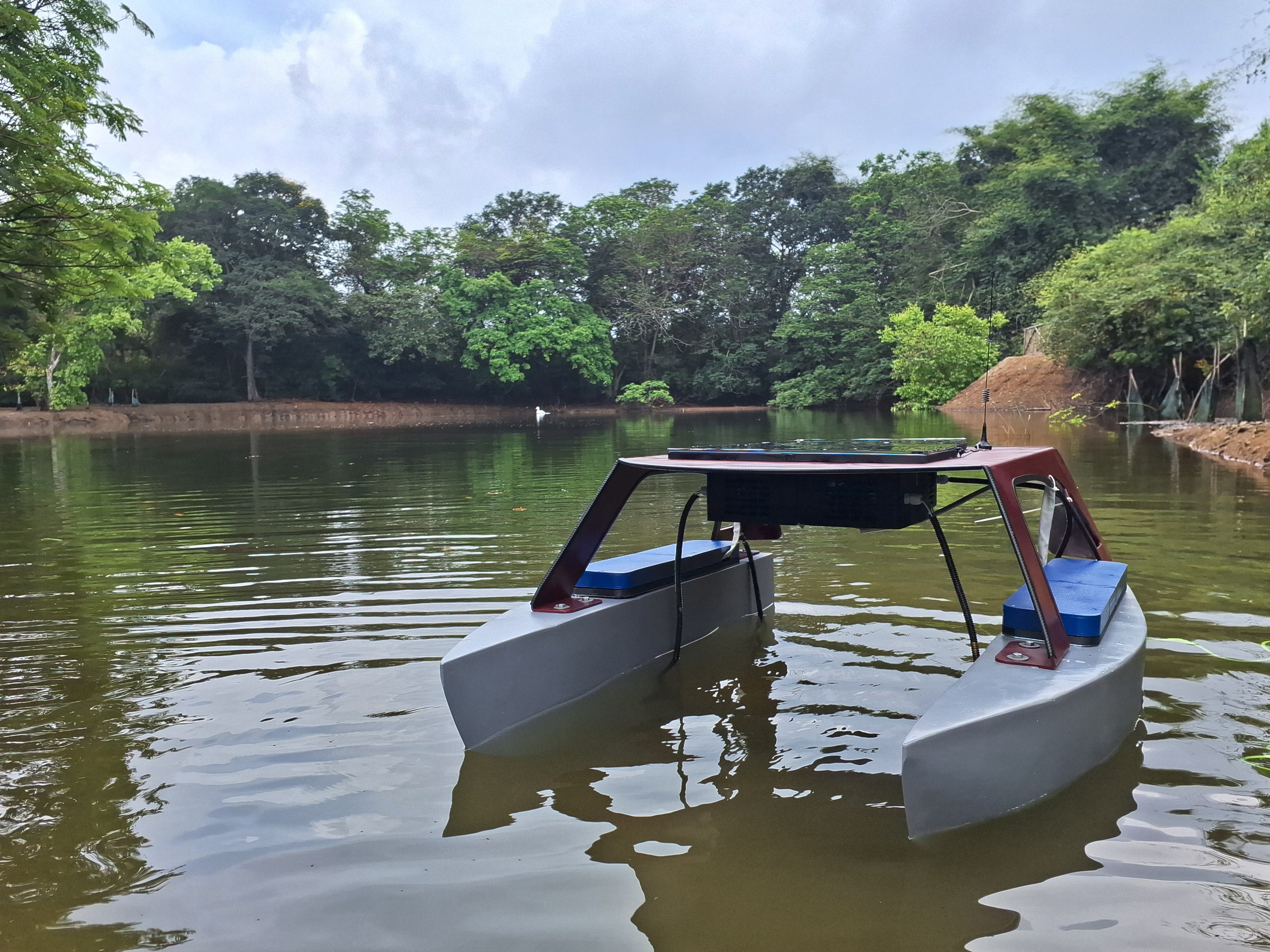
A fully autonomous, self-thinking environmental cleanup system that combines state-of-the-art computer vision, custom synthetic datasets, and edge AI inference on NVIDIA Jetson Nano. The system employs stereovision depth processing with Intel RealSense cameras and reinforcement learning for intelligent debris collection in aquatic environments.
2024 - 2025
AI Research Internship at Scrapify Ecotech
Project Duration
6 months of intensive development, testing, and deployment
AI Research Intern
Lead AI Developer & Computer Vision Specialist
Key Responsibilities
Model architecture design, dataset creation, edge deployment optimization
Fully operational autonomous system with real-time debris detection and collection capabilities. Currently in active environmental monitoring and cleanup operations.
The Ecofloater project represents a paradigm shift in autonomous environmental cleanup technology, combining cutting-edge artificial intelligence with practical ecological conservation. This fully autonomous system integrates advanced computer vision pipelines, custom synthetic training datasets, and sophisticated stereoscopic camera calibration to enable self-directed river cleaning operations. By leveraging Intel RealSense depth cameras, custom YOLO and Vision Transformer architectures, and reinforcement learning-based decision making, Ecofloater demonstrates how AI can address real-world environmental challenges at scale with minimal human intervention.
Technical Architecture
Custom YOLO Architecture
Specifically optimized object detection model for aquatic debris identification, trained on proprietary synthetic datasets simulating various water conditions and debris types.
Vision Transformer Integration
Hybrid architecture combining CNN-based detection with transformer attention mechanisms for improved contextual understanding of complex debris patterns.
Multi-Camera Fusion
Real-time processing of multiple video streams with synchronized detection and tracking across overlapping camera fields of view.
Intel RealSense Integration
Industrial-grade depth cameras providing accurate 3D spatial data for debris localization and navigation planning in dynamic aquatic environments.
Stereovision Calibration
Sophisticated camera calibration pipeline ensuring precise depth estimation across varying lighting and water surface conditions.
3D Object Localization
Point cloud processing for accurate debris positioning, enabling precise collection arm targeting and path planning optimization.
System Components
High-accuracy object detection trained on custom synthetic aquatic debris datasets
RL-based path planning with obstacle avoidance and efficient coverage patterns
Optimized inference on NVIDIA Jetson Nano for real-time autonomous operation
Robust operation in varying water conditions, currents, and visibility levels
Low-latency inference pipeline maintaining continuous detection and response
Power-efficient operation with minimal environmental impact during cleanup
Technology Stack
Key Achievements
Achieved continuous river cleaning operations with minimal human intervention. The system independently navigates, detects, and collects debris based on real-time environmental analysis.
Successfully deployed complex AI models on NVIDIA Jetson Nano, maintaining high detection accuracy while meeting strict latency requirements for real-time autonomous control.
Developed proprietary training datasets simulating diverse aquatic conditions, debris types, and lighting scenarios to ensure robust model performance in real-world deployments.
Created a scalable solution for automated water body cleanup that significantly reduces manual intervention costs while increasing cleanup efficiency and coverage area.
The Ecofloater project demonstrates the practical application of advanced AI technologies in addressing critical environmental challenges. By combining state-of-the-art computer vision with efficient edge deployment, the system proves that autonomous environmental cleanup is not only technically feasible but economically viable.
The research contributes to the growing field of environmental robotics, providing insights into synthetic dataset generation for specialized domains, edge AI optimization techniques, and the integration of multiple sensing modalities for robust autonomous operation.
Ocean Cleanup Operations
Adapting the technology for larger-scale marine debris collection systems
Smart City Integration
Connecting with urban environmental monitoring and management platforms
Multi-Robot Coordination
Developing collaborative swarm systems for large-scale cleanup projects
Biodiversity Monitoring
Extending vision capabilities to monitor aquatic ecosystem health